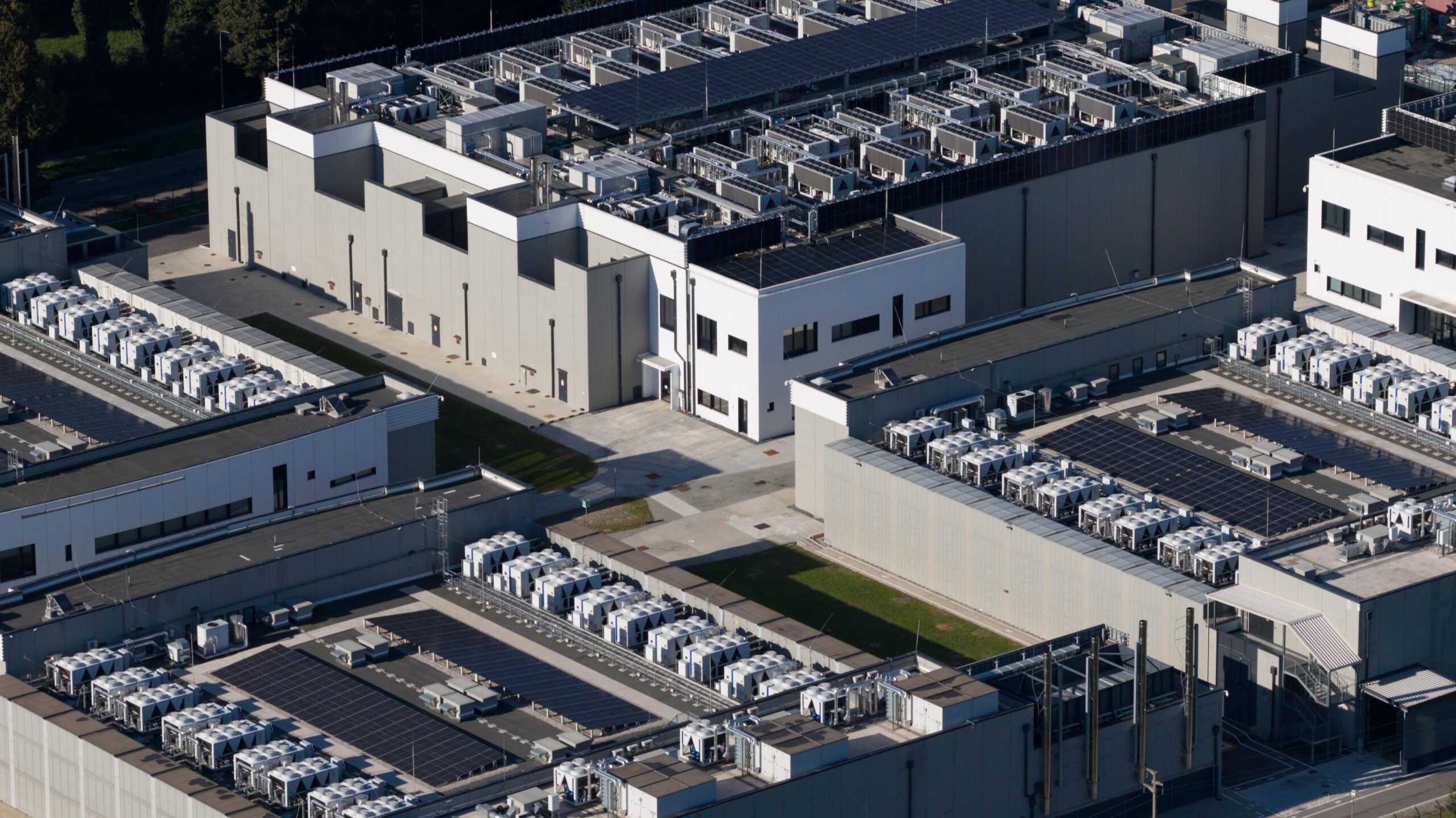
Data centres are running hotter than ever.
Rack densities are climbing to support AI and high-performance cloud computing. The thermal load is skyrocketing. To keep servers from hitting thermal shutdown you need air. Massive amounts of it.
The cooling infrastructure required to move that air generates a wall of sound. You have high-static pressure fans. You have chillers. You have backup generators.
It’s more than a low rumble: server fans produce a piercing high-frequency tonal whine. It cuts right through standard building fabrics.
For operators and consultants the challenge is twofold. You must reject heat to maintain uptime. But you must also meet strict environmental noise regulations.
If you fail the BS 4142 assessment you’re headed for disaster.
At Galloway Acoustics we view noise control as a critical component of the mechanical design. It isn’t a nice-to-have. It is an operational necessity.
Here is how we engineer the silence required for high-density computing.
The Internal Airflow Challenge
The problem starts inside the air handling units.
To move the necessary volume of air fans have to run at high RPMs. This generates turbulence and blade pass noise. You cannot simply block the duct to stop the sound because “pressure drop” is the enemy of efficiency. High resistance kills your PUE rating.
We solve this with sound attenuators.
These are aerodynamic splitters installed directly into the airstream.
- Aerodynamic Profiling: We design the “bullnose” entry and exit profiles to slice through the air rather than block it. This minimizes static pressure drop.
- Tuned Absorption: We carefully select the gap width between splitters to target specific frequencies. We can mute that high-pitched server whine without choking the airflow.
- Flow Management: The splitters straighten the airflow. This reduces turbulence and the “regenerated noise” that comes with it.
Securing the Building Perimeter
The building façade is the weak point. You need to pull fresh air in and exhaust hot air out from Chillers. Every opening is a potential leakage path for noise.
Standard weather louvres are useless here. They offer zero acoustic resistance.
You need acoustic louvres.
In a data centre context we typically deploy deep-bed units to handle the breakout noise.
- Façade Integration: We install these as the architectural skin of the intake and exhaust plenums. They look like part of the building but act as a barrier.
- The Tortuous Path: The blade geometry forces sound waves to impact the acoustic media multiple times. It strips energy from the wave before it hits the property line.
- Visual Screening: They hide the mechanical chaos inside while providing the necessary free area for ventilation.
The Backup Power Problem
Data centres live and die by redundancy. That means massive diesel generators on standby.
When these kick in for a test, the noise levels are deafening. A standard steel door does nothing here. You need acoustic doors.
We engineer these specifically for plant rooms and generator cells.
- High Mass: These aren’t standard fire doors. They are heavy multi-layered barriers designed to stop low-frequency engine roar.
- Magnetic Seals: A door is only as good as its seal. We use high-compression magnetic seals to ensure there are no air gaps.
- Threshold Performance: We pay strict attention to the bottom seal. If air can get under the door then sound can get under the door.
Rumbling on the Rooftop
Finally look at the roof. Chillers and cooling towers run 24/7. They radiate noise in all directions.
If there are residential buildings or offices nearby you have a problem.
The solution is the acoustic screen or enclosure. We build these around the equipment to create a “noise shadow.”
- Line of Sight: If the neighbors can see the chiller they can hear it. Our screens block that direct path.
- Barrier Effect: The solid mass of the screen reflects the sound upward away from sensitive receivers.
- Absorption: The inner face of the screen absorbs sound. This prevents the noise from bouncing around the roof and amplifying.
Also read: Acoustic Louvres: The Unsung Heroes of Architectural Noise Control
The Galloway Approach to Compliance
When it comes to data centres there’s nothing more expensive than guesswork.
If you install a silencing system that restricts airflow you overheat the servers. If you install one that lets too much noise out you violate planning conditions.
That’s why we don’t guess. We test relentlessly.
Our product range is backed by independent data from Salford University and Sound Research Laboratories. We know exactly what the pressure drop will be at a given face velocity. We know exactly what the insertion loss is at each frequency.
The Bottom Line
Cooling is the lifeblood of a data centre. Noise is the byproduct.
You cannot have one without managing the other. By taking a multi-layered approach you guarantee operational efficiency and regulatory compliance.
Don’t let acoustics be the bottleneck in your next build.
Contact the Galloway Acoustics engineering team today to discuss your cooling strategy and get a custom quote for your project.